Ahilyanagar Travel Guide
Everything You Need to Plan a Perfect Trip to Maharashtra's Hidden Gem
Planning a trip to Ahilyanagar requires somewhat different preparation than visiting a major tourist hub like Goa, Rajasthan, or the Ajanta-Ellora circuit. The district's attractions are spread across a large geographic area; infrastructure, while improving, is still developing in certain areas; and the most rewarding experiences often require stepping off the main roads and engaging with local life in ways that demand some flexibility and a spirit of genuine exploration. This guide is designed to give you everything you need to plan with confidence and travel with depth.
Ahilyanagar rewards the traveller who comes with curiosity rather than a checklist. The district is not a place where you tick off attractions and move on — it is a place that opens slowly, revealing new layers of interest with each day of engagement. The historical monuments reward repeat visits at different times of day. The natural sites vary dramatically across seasons. The cultural life pulses through daily routines that require patience and presence to access.
This guide is structured to help you with every practical aspect of your journey: getting to Ahilyanagar from major Indian cities, choosing accommodation, planning itineraries for different durations and interests, navigating local transport, understanding costs, and ensuring that your visit is safe, respectful of local culture, and as rewarding as possible.
Best overall: October–February (cool, dry, clear visibility). Monsoon magic: July–September (waterfalls, green landscapes, Ganesh Chaturthi). Avoid: April–June peak summer (temperatures 38–44°C).
One note before you begin planning: the district is officially named Ahilyanagar since 2023, but the city and much of the existing infrastructure — railway stations, bus services, road signs, and accommodation listings — still use the older name Ahmednagar. Both names refer to the same place. When searching for transport connections, accommodation, and services online, use "Ahmednagar" as your search term alongside "Ahilyanagar" to get complete results.
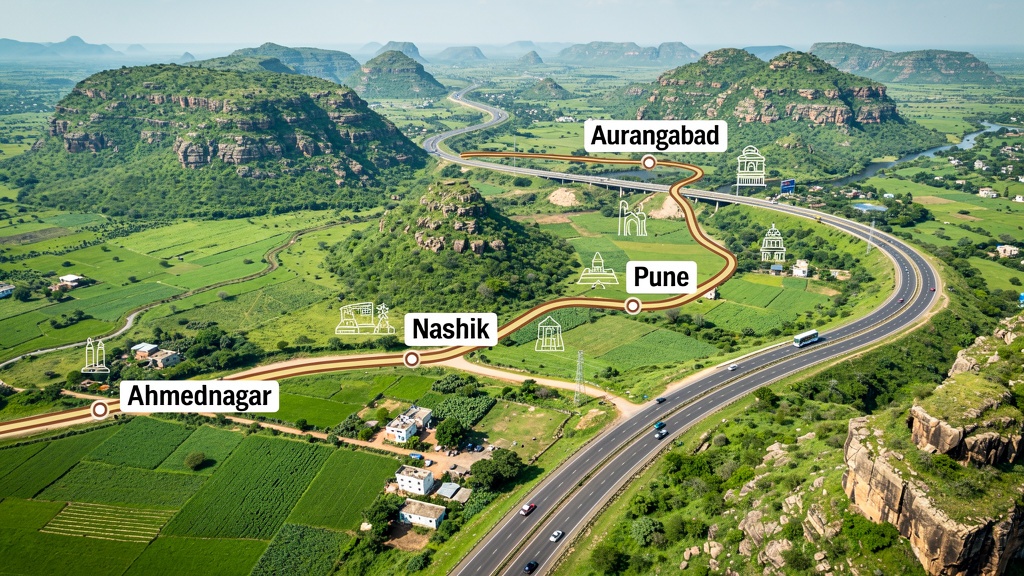
Nearest airport: Pune International Airport (PNQ) — 120 km (approx. 2 hours by road). Also accessible from Aurangabad Airport (120 km). Mumbai Chhatrapati Shivaji Maharaj International Airport is 260 km away. Pre-paid taxis and cab services operate from both Pune and Aurangabad airports to Ahmednagar city.
Ahmednagar Railway Station is on the Daund–Manmad line. Direct trains connect Ahmednagar to Pune (approx. 2.5 hrs), Mumbai (approx. 5–6 hrs via Pune), and various Deccan destinations. Key trains: Hussain Sagar Express, Nandigram Express, various intercity expresses. Check IRCTC for current schedules.
MSRTC (Maharashtra State Road Transport Corporation) operates frequent services between Ahmednagar and Pune (every 30–60 mins), Mumbai, Nashik, and Aurangabad. Semi-luxury and luxury Shivneri AC buses are available. Private sleeper buses connect Mumbai-Nashik-Ahmednagar overnight. Central Bus Stand is in the city centre.
NH 753F connects Pune to Ahmednagar (120 km, excellent 4-lane highway). NH-160 connects Nashik and Aurangabad. SH-10 routes connect to Shirdi. Self-drive from Pune is highly recommended — roads are good and scenic. Cab aggregators (Ola, Uber) available from Pune with booking.
The most convenient way to reach Ahmednagar from Pune is by road along NH 753F, which has been widened to a four-lane expressway quality highway for much of its length. The journey of approximately 120 kilometres typically takes between 1 hour 45 minutes and 2 hours 30 minutes depending on traffic conditions through Pune's eastern suburbs. The route passes through the pleasant town of Koregaon Bhima and several smaller settlements before opening into the flatter Deccan terrain approaching Ahmednagar.
For visitors intending to explore the Bhandardara region, the optimal approach is via Nashik (taking the Mumbai–Nashik Expressway) and then the state highway from Igatpuri towards Ghoti and Akole. This route offers the advantage of some beautiful Sahyadri scenery on the descent from the Ghats and positions you perfectly for the Bhandardara circuit without the need to first travel to Ahmednagar city.
Petrol stations and restaurants are frequent on all major approach routes. Fuel quality is generally reliable on national and state highways, but if you are driving into more remote areas — the Sandhan Valley approach roads, the more remote trekking base villages — fill up at the nearest town before proceeding.
Many visitors combine Shani Shingnapur with a pilgrimage to the globally famous Shirdi temple (dedicated to Sai Baba), located approximately 35 kilometres away. Shared autos, private taxis, and MSRTC buses operate frequently between the two pilgrimage sites, and the combined visit has become a standard pilgrimage circuit for visitors from across India. If combining the two sites, plan a full day; pilgrimage queues at Shirdi can be very long, particularly on Thursdays (Sai Baba's sacred day) and festival occasions.
Ahilyanagar's climate is classified as semi-arid tropical, with three distinct seasons that each offer a different kind of travel experience. Understanding the seasonal character of the district helps visitors plan a trip that aligns with their specific interests.
This period represents the optimal window for most visitors. Post-monsoon, the landscape has been refreshed by the rains — the grass is still green, wildflowers persist on the hillsides, and the tanks and reservoirs are full and visually spectacular. Temperatures range from a pleasant 12°C at night to around 28°C in the afternoon, making outdoor exploration comfortable at any time of day.
Visibility is excellent during this season, which particularly benefits trekkers heading to Harishchandragad, Kalsubai, and Ratangad — the clear air allows long-distance views that are simply not possible in the hazy summer. Wildlife activity at Bhandardara and in the Sahyadri forest patches is highest during this cooler season, and birdwatching rewards are exceptional from November to January when resident species are joined by a range of winter migrants.
The festive season from October to January also enriches the cultural experience of any visit. Navratri and Diwali (October/November), winter pilgrimage seasons, and the various local festivals that cluster in the cooler months mean that there is almost always something culturally alive and accessible happening somewhere in the district.
The monsoon transforms Ahilyanagar with particular drama. The Deccan plateau, dry and ochre in summer, becomes extraordinarily green; the Sahyadri ranges disappear into clouds for weeks at a time; and every stream becomes a rushing cascade. This is when the waterfalls are at their most spectacular — Bhandardara's Umbrella Falls, Randha Falls, and dozens of smaller cascades achieve their full theatrical power.
The Ganesh Chaturthi festival falls in August or September, and experiencing this supreme Maharashtrian celebration in the district — with its processions, music, and communal energy — is one of the most vivid cultural experiences in India. The monsoon also brings the Firefly Festival at Bhandardara (June–July), one of Maharashtra Tourism's most popular eco-events.
Practical challenges of monsoon travel should not be underestimated. Some roads, particularly in the Ghats and rural areas, can be temporarily blocked by landslips or flooding. Trekking routes become slippery and dangerous. Accommodation at popular spots like Bhandardara is in very high demand and must be booked well in advance. Mosquito protection is important throughout the monsoon season.
The summer months, particularly April to June, bring severe heat to the Deccan plains. Ahmednagar city itself can reach 40–44°C in May, making urban exploration unpleasant in the midday hours. However, the higher altitude sites — Harishchandragad (1,424 m), Kalsubai (1,646 m), and the Sahyadri hill stations — are considerably cooler and remain accessible.
The archaeological sites (Ahmednagar Fort, Salabat Khan's Tomb) are worth visiting early morning (before 9 AM) even in summer — the fort's stone walls haven't absorbed the day's heat yet and the quality of early light on the basalt stonework is exceptional for photography. The spiritual sites — Shani Shingnapur, Meherabad — are also manageable year-round given that time at each can be flexibly allocated.
Holi (March) is celebrated with tremendous enthusiasm across the district and is an excellent cultural reason to plan a visit in this transitional season before the heat peaks.
| Season | Months | Temperature | Best For | Challenges |
|---|---|---|---|---|
| Post-monsoon/Winter | Oct–Feb | 12–28°C | Everything — ideal for all activities | Peak season; book accommodation early |
| Monsoon | Jul–Sep | 22–32°C | Waterfalls, green landscapes, festivals | Road disruptions; limited trekking; book well ahead |
| Spring/Pre-summer | Mar–Apr | 22–38°C | Holi festival, early morning heritage visits | Increasing heat; plan morning-only outdoor activities |
| Peak Summer | May–Jun | 28–44°C | Hill treks (Harishchandragad, Kalsubai); Shani Jayanti | Extreme heat in plains; very limited outdoor activity midday |
 🏨 From ₹800 to ₹5,000/night
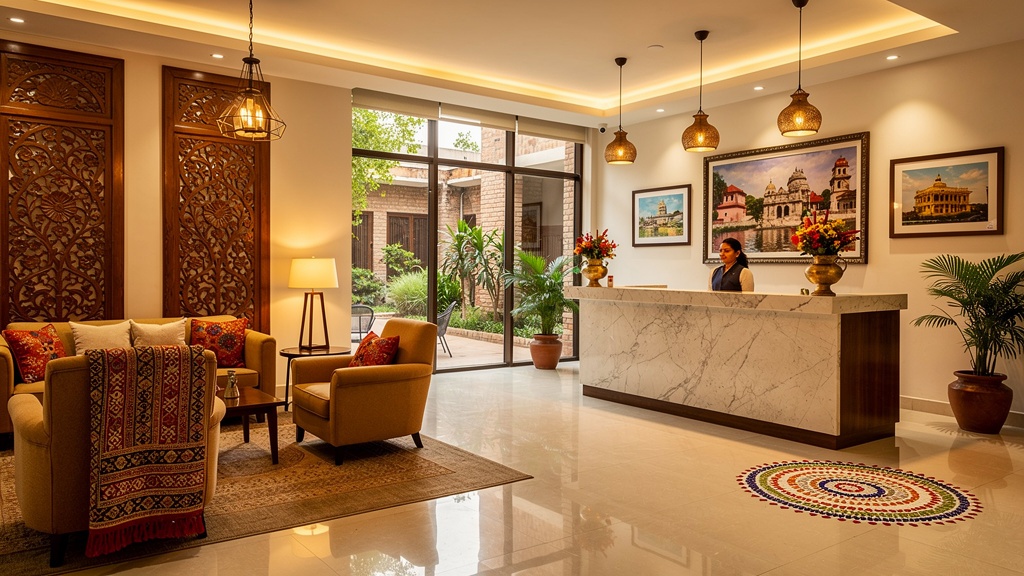
Accommodation options in Ahilyanagar have improved considerably in recent years, driven by growing tourism volumes and the increasing expectations of travellers familiar with better-served destinations. While the district does not yet have five-star luxury properties, the mid-range and budget segments are well represented, and there are some genuinely charming options for travellers who prioritize authenticity and local character over standardized amenities.
Ahmednagar City is the natural base for exploring the district's main attractions. The city offers the widest range of accommodation, from budget guesthouses serving the pilgrimage market (from approximately ₹800–1,200 per night) to well-appointed business hotels with air conditioning, restaurant facilities, and reliable Wi-Fi (₹2,500–5,000 per night). Several newly opened properties have raised the standard considerably, offering clean, modern rooms at fair prices.
Bhandardara deserves special mention as an accommodation destination rather than merely a day-trip from Ahmednagar. The MTDC Bhandardara Resort — located directly on the lakeside — offers comfortable rooms and cottages with genuine views over Arthur Lake, and the experience of waking to the sound of birds on the lake and watching the morning mist clear from the Sahyadri peaks is one that justifies the overnight stay entirely. The resort's restaurant offers reliable Maharashtrian food in a beautiful setting.
Beyond the MTDC property, a number of private resorts have established themselves around Bhandardara, ranging from basic camping options to more comfortable permanent structures. Several homestays in the villages around the lake offer the most authentic local experience, with meals prepared from homegrown produce and evening conversations that provide genuine insight into life in the Sahyadri foothills. These homestay options are best booked through local operators rather than large booking platforms, and asking at the Bhandardara village for recommendations on arrival often yields excellent results.
During the monsoon season and peak festival weekends, accommodation at Bhandardara books out weeks in advance. Last-minute visitors during these periods may find themselves facing a long drive back to Ahmednagar city or Nashik. Pre-booking is non-negotiable during these periods.
The village of Shani Shingnapur itself offers several basic dharmashalas and lodges primarily aimed at pilgrims, and more comfortable options in the nearby town of Nevasa. For visitors combining Shani Shingnapur with Shirdi, the town of Shirdi (35 km away) has an extensive range of accommodation at all price points, well-developed in response to the enormous pilgrimage traffic it receives. Many visitors stay at Shirdi and make Shani Shingnapur a day trip, which is logistically convenient if not particularly economical.
The trekking bases for Harishchandragad and Kalsubai — the villages of Khireshwar, Pachnai, and Bari respectively — have small guesthouses and camping facilities that are basic but adequate for trekkers who want to start early. These facilities are better suited to the seasoned traveller comfortable with modest amenities; those accustomed to urban hotel standards may be disappointed. The trade-off is proximity to the trail and the extraordinary experience of being on a Sahyadri hillside at 5 AM when the sky begins to lighten and the forest fills with birdsong.
The most important thing to know about navigating Ahilyanagar district is that the attractions are widely spread and public transport, while technically available, is inadequate for efficient exploration. Having your own vehicle — either a self-drive rental or a hired car with driver — will dramatically increase the scope, flexibility, and enjoyment of your visit.
Self-drive car rental agencies operate in Ahmednagar city, and several Pune-based agencies offer the option of collecting a car from Pune and driving to Ahmednagar. International visitors can use their driving licences for rentals, though the usual practical caveats about Indian driving conditions apply: traffic patterns differ significantly from Western norms, rural roads require additional vigilance for livestock and pedestrians, and mountain roads demand careful respect for their gradients and curves.
Hiring a local taxi or cab with a driver for the duration of your stay is often the most practical choice, particularly for visitors unfamiliar with Maharashtrian road conditions. Local drivers know the routes, the best roadside dhabas, the current state of road closures and diversions, and — often — the unofficial shortcuts and viewpoints that don't appear in any guidebook. A full-day car with driver (typically an Innova or equivalent) costs approximately ₹2,500–3,500 per day depending on distance covered, and can usually be arranged through your hotel.
Within Ahmednagar city itself, auto-rickshaws are the standard local transport and are readily available throughout the day. Shared autos (which follow fixed routes at lower fares) operate on major city arteries. Bike rentals are beginning to appear in the city, catering to younger travellers who want to explore at their own pace. Ola cab services operate in the city, though driver availability can be inconsistent and surge pricing applies during peak periods.
For budget travellers, MSRTC services connect Ahmednagar city to Shani Shingnapur, Shirdi, Nevasa, and various other district towns with reasonable frequency. Journey times on these routes are significantly longer than by private vehicle (due to multiple stops) but costs are substantially lower — typically ₹30–100 per journey. The bus stand in Ahmednagar city is well-organized with reasonably reliable departure information.
For Bhandardara and the Sahyadri trekking bases, MSRTC services exist but are infrequent (often one or two departures per day) and timings may not align well with your plans. Shared jeeps from Nashik and Igatpuri cover some of these routes more conveniently.
Whether you have a weekend or a full week, these carefully crafted itineraries help you make the most of your Ahilyanagar visit.
Weekend Trip
Day 1: Arrive Ahmednagar. Morning: Fort tour + Nehru Museum. Afternoon: Salabat Khan's Tomb, Damdi Masjid, Bhadkal Gate. Evening: Old city walk + dinner at local dhaba.
Day 2: Early start for Shani Shingnapur (85 km). Spend 2–3 hours. Optional: 35 km to Shirdi for Sai Baba temple. Return to Ahmednagar or drive direct back to Pune.
Nature & Adventure
Day 1: Drive from Nashik/Pune to Bhandardara. Afternoon: Lake boat ride, Umbrella Falls walk. Sunset at Wilson Dam. Overnight at MTDC Resort.
Day 2: Trek to Ratangad Fort (full day). Evening campfire at resort.
Day 3: Early morning birdwatching. Drive to Kalsubai base (Bari). 6-hour Kalsubai peak trek (optional). Return journey.
Full Week
Days 1–2: Ahmednagar city heritage circuit, fort, tombs, old city, markets.
Day 3: Shani Shingnapur + Shirdi pilgrimage. Overnight Shirdi/Nevasa.
Day 4: Meherabad (Arangaon), Nighoj Potholes. Return Ahmednagar.
Days 5–6: Bhandardara — lake, waterfalls, Ratangad Fort trek, overnight stay.
Day 7: Harishchandragad trek (full day) or Kalsubai. Return journey.
Photographers visiting Ahilyanagar will want to concentrate their effort on early morning and late afternoon light, which transforms the district's stone monuments and natural landscapes into extraordinary subject matter. Day 1: Fort at sunrise, then Salabat Khan's Tomb in the warm afternoon light. Day 2: Shani Shingnapur — arrive at 6 AM for the first light on the deity and the ritual morning bath; stay through to catch the mid-morning crowd of devotees at full surge. Day 3: Bhandardara — pre-dawn at the lakeside, then the waterfalls in morning light. Day 4: Harishchandragad for landscape photography — the views from the Kokan Kada cliff at any time of day are spectacular, but the morning panorama with low mist in the valleys is genuinely sublime.
Day 1: Shani Shingnapur (arriving for dawn puja at 5:30 AM) followed by Shirdi for Sai Baba darshan. Overnight Shirdi. Day 2: Morning puja at Shirdi; drive to Meherabad for the afternoon. Spend 2–3 hours at the Samadhi and explore the archives. Evening: Ahmednagar — optional visit to the Dargah of Salabat Khan. Day 3: Visit the Hemadpanthi temples in the district; attend morning Kirtan at a local temple if timing permits. Return journey.
Ahilyanagar is a very affordable destination by both Indian and international standards. The majority of major attractions have either no entry fee (Shani Shingnapur, Meherabad, most temples) or very modest fees (Ahmednagar Fort: ₹25 Indian). Accommodation ranges from basic but clean guesthouses at ₹800 per night to comfortable mid-range hotels at ₹3,500 per night. Food at local dhabas and restaurants is extremely reasonable — a full meal rarely exceeds ₹200–300 per person.
| Category | Budget Traveller | Mid-Range | Comfortable |
|---|---|---|---|
| Accommodation (per night) | ₹600–1,200 | ₹1,800–3,000 | ₹3,000–5,500 |
| Food (per day) | ₹300–500 | ₹600–1,000 | ₹1,000–1,800 |
| Transport (per day) | ₹400–800 (bus/auto) | ₹1,200–1,800 (shared taxi) | ₹2,500–3,500 (private car) |
| Entrance Fees (daily) | ₹50–150 | ₹100–250 | ₹150–300 |
| Total (per day) | ₹1,350–2,650 | ₹3,700–6,050 | ₹6,650–11,100 |
Eating well in Ahilyanagar is one of the genuine pleasures of visiting the district, provided you know where to look. The principle is simple: local, unpretentious, early. The best Maharashtrian food is served at modest dhabas and family-run restaurants that typically open at dawn and close by afternoon. By mid-morning, the best Misal is finished and the day's best cooking is already history.
Breakfast (7–9 AM): Misal Pav is the absolute priority — order the kat (spicy gravy) on the side and add to taste. Also excellent: Pohe (flattened rice with onion, mustard, and turmeric), Upma, and the sublime Thalipeeth (savoury multigrain pancake) served with a pat of white butter and a side of curd. Tea in Maharashtra is typically strong, sweet, and milky — the masala chai available at roadside stalls is reliably excellent.
Lunch (12–2 PM): The thali — a complete meal served on a large stainless steel plate with portions of dal, bhaji, rice, roti, papad, pickle, and often a sweet — is the definitive Maharashtrian lunch experience. Thalis at local hotels and dhabas typically cost ₹80–150 and represent extraordinary value. Look for establishments where working people eat rather than tourist restaurants.
Snacks: Vada Pav (deep-fried spiced potato dumpling in a bread roll with chutneys) is Maharashtra's supreme street food and available everywhere. Bhel Puri, puffed rice salads, and various evening bhajis (fritter combinations) are popular late-afternoon snacks.
Dinner: Maharashtrian dinner is relatively light — rotis or bhakri (sorghum flatbread) with dal, a vegetable dish, and yogurt. Non-vegetarian options (chicken rassa, mutton curry) are widely available at restaurants in Ahmednagar city and are generally of good quality when you choose busy, well-patronized establishments.
Ahilyanagar is highly vegetarian-friendly. Many dhabas and local restaurants serve exclusively vegetarian food, particularly in and around pilgrimage sites. The Maharashtrian vegetarian tradition is incredibly rich — there is absolutely no need for meat to eat magnificently well in this district. Indeed, some of the district's most celebrated dishes — Bharli Vangi (stuffed brinjal), Zunka Bhakri (chickpea flour preparation with sorghum bread), Usal (dried bean curry), and the extensive range of festival sweets — are entirely vegetarian and represent the tradition at its most refined.
At temples and religious sites, cover shoulders and knees. At Shani Shingnapur, both men and women should dress conservatively. Remove footwear at temple entrances.
Carry bottled water at all times, especially in summer. Local tap water quality is variable; stick to sealed bottled water for drinking and brushing teeth in unfamiliar settings.
Airtel and Jio have the best coverage in Ahilyanagar district. Download offline maps (Google Maps or Maps.me) for the rural and mountain areas. Carry a power bank.
Carry a basic medical kit. Mosquito repellent is essential in monsoon. Consult your doctor about prophylactic medications if visiting during high-risk malaria periods (July–October).
Carry sufficient cash for rural areas, temples, and local transport. ATMs in Ahmednagar city are reliable. Remote trekking base villages may be entirely cash-only.
Ahmednagar city has well-equipped hospitals and pharmacies. Rural areas have primary health centres. For serious medical needs, Pune (2 hours) has superior specialist facilities.
Always ask permission before photographing individuals, particularly women. Some temple inner sanctums prohibit photography. Professional cameras may require permits at the Fort.
Marathi is the primary language. Hindi is widely understood. English is spoken at hotels, major tourist sites, and by younger residents. A few Marathi phrases are warmly appreciated.
Ahilyanagar is generally a safe destination for travellers. Petty crime levels are low, particularly in rural areas. Solo female travellers report generally positive experiences in the district, though the standard precautions applicable to any Indian destination — being aware of your surroundings at night, using reliable transport, not sharing your itinerary with strangers — apply here as everywhere.
At trekking destinations, never trek alone without informing your accommodation of your route and expected return time. The trails on Harishchandragad and some Sahyadri routes are remote enough that a twisted ankle could be a serious issue if no one knows where to look for you. Trekking in a group of at least two is strongly recommended. Guides, available at base villages, are worth the modest fee both for safety reasons and for the cultural and natural history knowledge they contribute to the experience.
Environmental responsibility at natural sites — particularly at Bhandardara, Harishchandragad, and the forest trails — is an ethical imperative as well as a legal requirement. Carry your waste out; use designated toilet facilities; do not disturb wildlife; avoid making fires except in designated areas. The natural beauty of these sites is under increasing pressure from visitor numbers, and its preservation depends on the individual choices of each person who visits.
The open roads of the Deccan plateau — Maharashtra's finest road trip country
One dimension of Ahilyanagar travel that deserves explicit attention is the extraordinary quality of the road trip experience this district provides. Maharashtra's road network in this region — improved significantly over the past decade — offers long stretches of smooth, relatively uncongested highway through landscapes of considerable beauty. The Deccan plateau, viewed from the windshield of a car or the saddle of a motorcycle, has an austere grandeur that grows on you steadily — the vast sky, the low-lying sugar fields, the dark basalt ridges on the horizon, the occasional Hemadpanthi temple tower rising above a village, the brilliant flowers of the bougainvillea planted at every roadside petrol station.
The approach to the Sahyadri, as the highway begins to climb through the ghats towards Bhandardara or Harishchandragad, is one of the most scenic drives in western India. The hairpin bends and dramatic elevation changes are manageable in a standard car and reward the driver with views that would merit long detours in more famous mountain driving destinations. In the monsoon, when every crevice in the basalt cliffs becomes a temporary waterfall and the valley below disappears into moving cloud, the Ghat roads are nothing short of spectacular.
Motorcycle travellers find Ahilyanagar particularly rewarding. The combination of open Deccan plain riding and Ghat mountain roads offers an extremely varied riding experience, and the absence of the tourist infrastructure that occasionally overwhelms destinations like Goa or Coorg means that there is a genuine sense of exploratory freedom on the roads here. The biking community has discovered the Sahyadri routes in recent years, and you will often encounter small groups of riders at Bhandardara and other viewpoints.
Plan your road trip to avoid peak festival weekends and early monsoon season when roads can experience higher traffic and occasional diversions. At any other time, the roads of Ahilyanagar offer driving of a quality and variety that will rank among the most memorable experiences of your Maharashtra journey.
You now have all the practical knowledge needed for a rewarding, responsible, and memorable trip to this extraordinary district. We look forward to hearing about your adventures.