Historical
Ahmednagar Fort
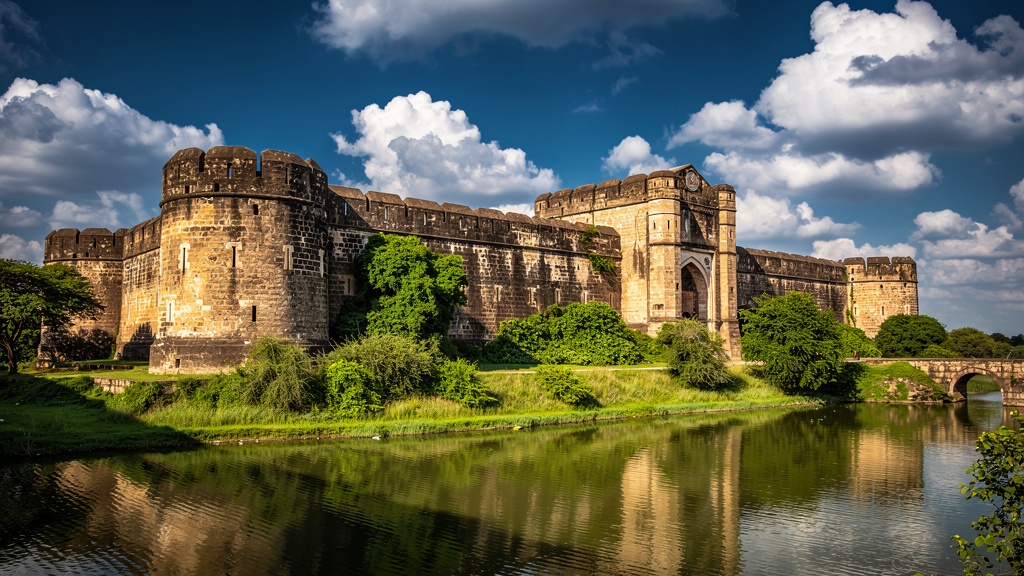
Built in 1490 CE by Nizam Shah, this circular fort with its massive moat is a masterpiece of Deccan military architecture and the site where Nehru wrote Discovery of India.
Explore More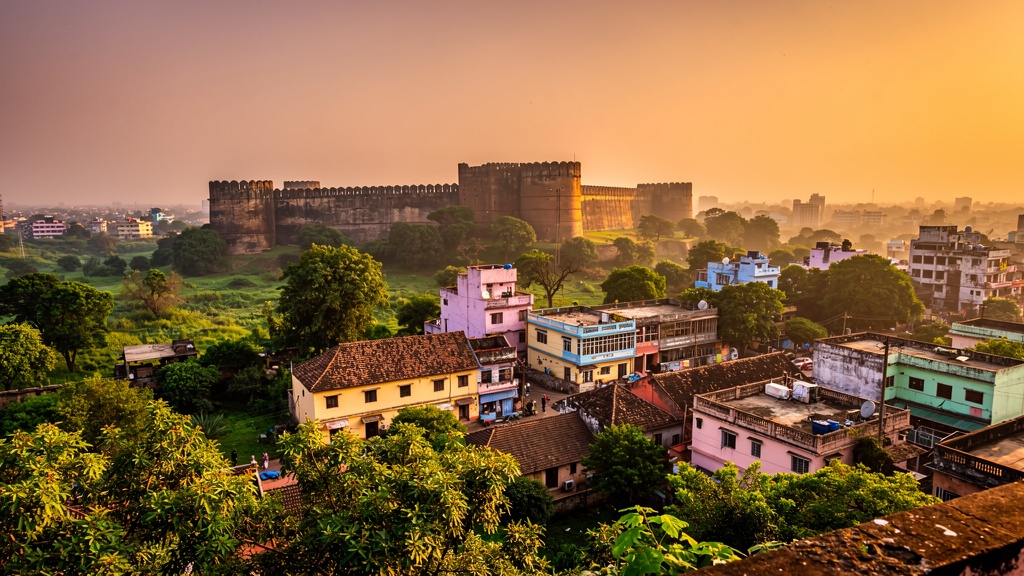
Maharashtra's Hidden Jewel
Explore the land of ancient forts, sacred shrines, thundering waterfalls, and the living traditions of the Deccan heartland. Ahilyanagar – recently renamed to honour the legendary queen Ahilyabai Holkar – awaits you.
Ahilyanagar, officially renamed in 2023 from the long-standing name Ahmednagar in honour of the revered Maratha queen Ahilyabai Holkar, stands as one of Maharashtra's most historically rich and culturally vibrant districts. Nestled in the heart of the Deccan Plateau, this storied city and its surrounding region offer travellers a remarkable tapestry of medieval fortifications, living religious traditions, dramatic natural landscapes, and authentic Maharashtrian life that remains largely untouched by mass tourism.
The district sits at an elevation of approximately 649 metres above sea level, blessing it with a pleasant climate through much of the year. Bounded by the Sahyadri ranges to the west and the open Deccan plateau stretching eastward, Ahilyanagar occupies a geographically strategic position that explains why successive dynasties — from the Nizam Shahis to the Mughals, from the Marathas to the British — fought so fiercely to control it.
At the heart of the district lies Ahmednagar city, founded in 1494 CE by Ahmad Nizam Shah I, the founder of the Nizam Shahi Sultanate. The city served as the capital of this powerful Deccan Sultanate for over a century and witnessed the dramatic political theatre of Mughal conquest, Maratha resistance, and colonial rule. Today, the echoes of that turbulent past reverberate through its stone fort walls, elegant tombs, and ancient mosques.
But Ahilyanagar is far more than its past. The district is home to one of India's most famous pilgrimage sites — Shani Shingnapur, the village renowned across the country for its unique tradition of doorless homes and its powerful Shani deity. Every day, thousands of devotees stream in from every corner of India to seek blessings from Lord Shani. Equally significant is Meherabad, the spiritual home of the universally beloved mystic Meher Baba, which draws visitors from over 80 countries annually.
Nature lovers will find much to celebrate in Ahilyanagar. The Bhandardara region, tucked into the Western Ghats foothills, rewards visitors with spectacular Arthur Lake, the roaring Umbrella Falls, a stunning natural backwater at Randha Falls, and a canopy of dense forest teeming with wildlife. Harishchandragad, one of Maharashtra's most challenging and rewarding trekking destinations, also falls within this district, drawing adventure seekers year-round.
The district's agricultural heartland is equally compelling — Ahilyanagar is synonymous with quality sugarcane cultivation and is home to one of Maharashtra's most productive cooperative sugar industries. The region's farmers have built a reputation for progressive agricultural practices, and a visit to the rural hinterland offers fascinating insights into contemporary Deccan village life.
Culturally, the district pulsates with a rich calendar of festivals and performing arts traditions. The Ganesh festival, celebrated with extraordinary fervour here, transforms even the smallest villages into kaleidoscopes of colour and music. The region has deep roots in the Warkari devotional tradition — the pilgrimage culture that journeys to Pandharpur in honour of Lord Vitthal — and this spiritual ethos shapes the district's character in profound ways.
Food lovers will discover a regional cuisine of tremendous depth and character. The sharp flavours of Maharashtrian cooking — the liberal use of peanuts, coconut, sesame and the iconic combination of sweet-sour-spicy — find their most authentic expressions in the domestic kitchens and roadside dhabas of Ahilyanagar. Misal Pav, Thalipeeth, Bharli Vangi, and the festive Puran Poli are staples that tell the story of Deccan culinary heritage in every bite.
For travellers seeking a destination that combines intellectual stimulation with spiritual depth, natural beauty with cultural richness, and historical grandeur with the simple pleasures of rural Maharashtra, Ahilyanagar presents an almost irresistible proposition. Unlike the heavily touristed circuits of Pune-Mumbai or the Ajanta-Ellora corridor, Ahilyanagar retains an authenticity that many travellers find increasingly rare — a place where you can still be genuinely surprised, where encounters with locals feel unscripted, and where the weight of history feels immediate and personal.
This guide is your comprehensive companion to everything Ahilyanagar has to offer. Whether you are planning a weekend getaway from Pune, a week-long deep-dive into Maharashtra's heritage, or a spiritual sojourn seeking inner peace, the pages that follow will equip you with all the knowledge you need to make the most of your journey to this extraordinary corner of the Deccan.
In an era when popular tourist destinations have become increasingly commodified and over-visited, Ahilyanagar offers something genuinely precious: the opportunity to travel with depth and without crowds. The district's attractions are spread across a large geographic area, ensuring that even during peak pilgrimage seasons at Shani Shingnapur, you can find pockets of serene solitude at Harishchandragad's ancient caves or by the tranquil shores of Arthur Lake.
The city of Ahmednagar itself is often overlooked by travellers rushing between Pune and Aurangabad, yet it rewards the curious visitor amply. The Ahmednagar Fort, one of the finest examples of medieval Deccan military architecture, is a structure of remarkable sophistication — its circular design, deep moat, and massive bastions speak to the engineering genius of the Nizam Shahi period. The fort gained additional historical poignancy as the site of Jawaharlal Nehru's imprisonment by the British during the Quit India Movement of 1942, where he penned the famous Discovery of India.
History enthusiasts will want to spend time at the Salabat Khan's Tomb, a soaring two-storeyed structure sometimes called the "Chand Bibi's Palace" in popular parlance, built in memory of a noted general of the Nizam Shahis. The architectural precision of this tomb, standing on a high plinth surrounded by a formal garden, showcases the aesthetic refinement of the Deccan Sultanate tradition.
The Farah Bakhsh Garden and the elegant Damdi Masjid, with its distinctive Persian-influenced minarets, add further layers to the city's architectural narrative. Walking through the old city quarters of Ahmednagar, you encounter a living palimpsest where Mughal-era havelis stand beside Victorian-era bungalows, and contemporary Maharashtra pragmatically inhabits the shells of its many pasts.
Beyond the city, the district's countryside opens up into a landscape of extraordinary variety. The Western Ghats fringe, particularly around Bhandardara and the Akole taluka, transforms into a lush green paradise during the monsoon — waterfalls cascade down basalt cliffs, valleys fill with mist, and the air carries the intoxicating scent of wet earth and wildflowers. Come winter, the same landscapes offer crisp clear skies and long days perfect for trekking, boating, and wildlife spotting.
Ahilyanagar's connectivity has improved markedly in recent years. National Highway 753F connects the city to Pune in approximately two hours, while NH-160 links it to Aurangabad and the Ajanta-Ellora circuit. The Ahmednagar Railway Station connects to major Indian cities, and the proximity to Pune International Airport — just 120 kilometres away — makes international access straightforward.
The district administration's investment in tourism infrastructure, including improved signage, visitor facilities at major sites, and growing accommodation options ranging from budget guesthouses to boutique heritage properties, has made travel here considerably more comfortable than in previous decades. Yet the district retains its essential unpretentiousness — there are no theme parks here, no manufactured experiences, only the genuine article delivered in the unhurried Maharashtra way.
For photographers, Ahilyanagar is an endless source of material: the golden fort walls catching the first light of dawn, the swirling orange robes of Warkari pilgrims on monsoon roads, the geometric precision of ancient tomb facades, children playing cricket in village lanes with the Sahyadri backdrop, and the serene stillness of Bhandardara's predawn lake surface. Every frame tells a story that is unmistakably Maharashtra, unmistakably India.
In naming the district Ahilyanagar, Maharashtra has drawn attention to an often-overlooked aspect of its heritage: the central role of women in shaping this region's destiny. Ahilyabai Holkar, born in the neighbouring region, became one of the most enlightened rulers of 18th-century India, building temples, dharmashalas, and ghats across the subcontinent, fostering trade, and protecting her subjects with a combination of military acumen and profound compassion. Visiting the region bearing her name is an opportunity not only to experience its outstanding natural and historical attractions, but also to reflect on the remarkable individuals who shaped it.
We invite you to move beyond the brochure version of Maharashtra and discover Ahilyanagar's magnificent complexity for yourself. The pages of this guide are filled with everything you need to know — the sights, the flavours, the stories, and the practical information that will help you travel smart and travel deep. Welcome to Ahilyanagar. Welcome to the real Maharashtra.
From ancient forts to sacred shrines, from emerald waterfalls to serene pilgrimage centres — these are the experiences that define a trip to Ahilyanagar.
Historical
Built in 1490 CE by Nizam Shah, this circular fort with its massive moat is a masterpiece of Deccan military architecture and the site where Nehru wrote Discovery of India.
Explore More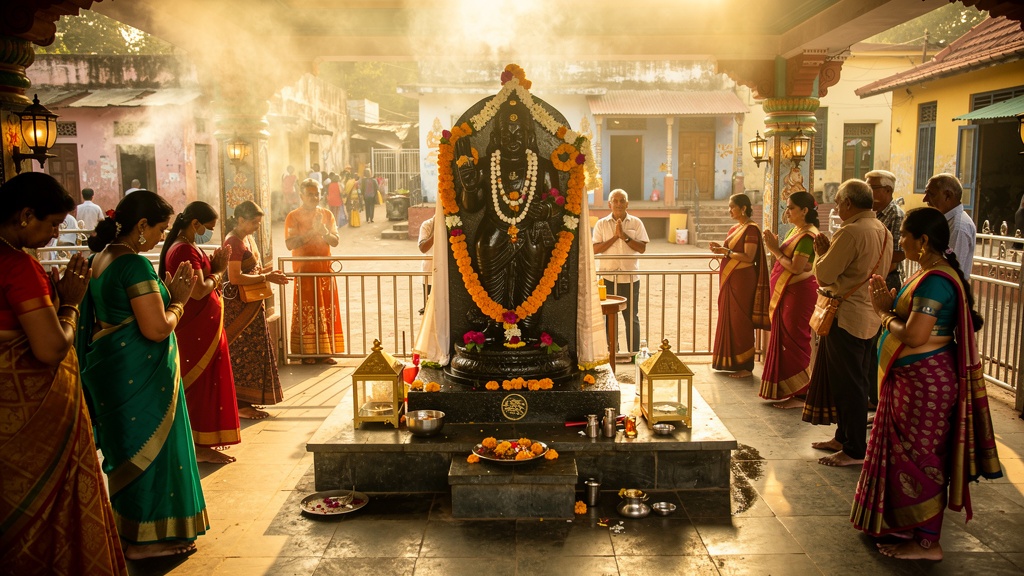
Spiritual
India's most famous Shani temple, where an ancient village tradition of doorless homes testifies to unwavering faith in Lord Saturn's divine protection.
Explore More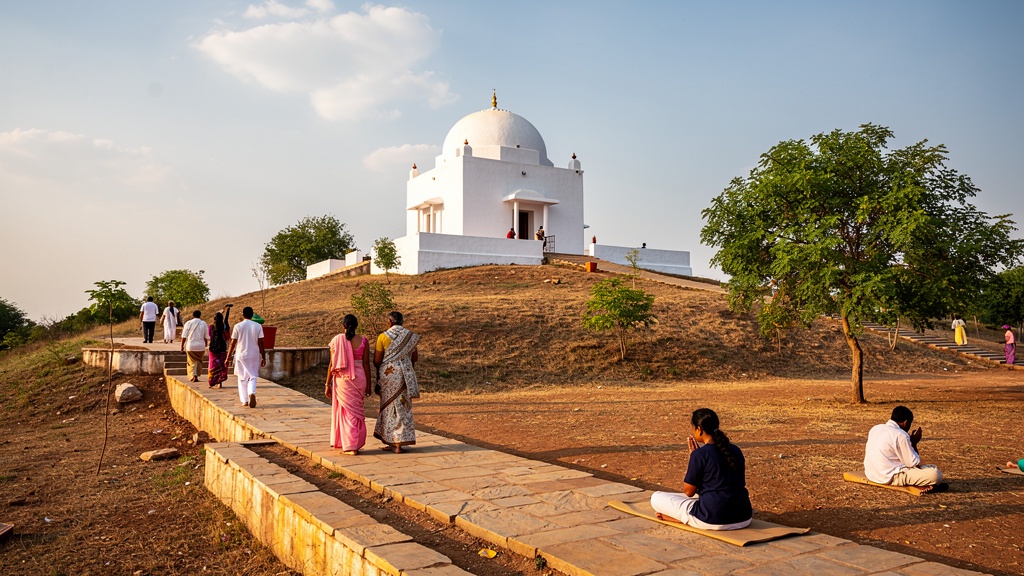
Pilgrimage
The sacred dargah and spiritual community of Avatar Meher Baba, drawing seekers from over 80 nations to this quietly powerful hillside near Ahmednagar.
Explore More
🏰 Built circa 1490 CE
Among the most impressive medieval structures in the entire Deccan region, Ahmednagar Fort stands as silent testimony to the ambition, engineering prowess, and aesthetic refinement of the Nizam Shahi Sultanate. The fort's circular plan — unusual in an era that typically favoured rectangular layouts — reflects sophisticated understanding of defensive geometry, allowing defenders to cover all angles of approach without blind spots.
The fort's history is inseparable from the broader sweep of Deccan history. It was here that the young Maratha warrior Sambhaji, son of Chhatrapati Shivaji Maharaj, spent years imprisoned. It was within these walls that the British held Jawaharlal Nehru, Maulana Azad, and other Congress leaders during the Quit India Movement (1942–45), a period of quiet intellectual resistance that gave India the timeless gift of Nehru's Discovery of India.
Whether you travel for history, spirituality, nature, cuisine or adventure, Ahilyanagar delivers an experience that surpasses expectations every time.
Medieval forts, Sultanate tombs, and colonial-era buildings create an unparalleled open-air museum of Deccan heritage.
Shani Shingnapur, Meherabad, and dozens of ancient temples offer genuine spiritual experiences for seekers of every tradition.
Bhandardara's Arthur Lake, Umbrella Falls, Randha Falls, and the Kalsubai peak provide stunning natural landscapes year-round.
Harishchandragad, Ratangad Fort, and the Sahyadri escarpments offer challenging and rewarding treks for all levels.
Taste the real flavours of Maharashtra — spicy Misal Pav, sweet Puran Poli, smoky Bharli Vangi, and much more.
Lavani dance, Tamasha theatre, Warkari devotional music, and the vibrant Ganesh festival bring culture alive every season.
Every corner of Ahilyanagar offers extraordinary visual material: architecture, landscapes, festivals, and everyday village life.
Just 2 hours from Pune and 3 from Aurangabad, Ahilyanagar is a perfectly placed base for exploring western Maharashtra.
Ahilyanagar at golden hour — where history, spirituality and natural beauty converge
One of Ahilyanagar's most compelling qualities as a travel destination is the sheer variety of experiences it packs within a single administrative district. Within a driving radius of approximately 100 kilometres from Ahmednagar city, you can visit a fort built by a Sultanate ruler in the 15th century, seek divine blessings at a temple famed across India, stand beneath a monsoon waterfall of theatrical proportions, and spend a quiet evening by a placid mountain lake watching hornbills cross the forest margin. This concentration of diverse experiences is rare anywhere in India, let alone in one district.
The city of Ahmednagar itself warrants at least a full day of exploration. Begin at the fort in the early morning when the slanting light throws the basalt walls into sharp relief and the moat reflects the sky in blues and golds. Move from there to the old city quarters where the weekly bazaar overflows with fresh produce, spices, textiles, and the irresistible sounds of commercial Maharashtra at full throttle. Pause for a breakfast of Misal Pav at one of the city's beloved old restaurants, then explore the Farah Bakhsh Garden before the afternoon heat sets in.
A short drive from the city brings you to the archaeological remains of the Nizam Shahi period: the Bhadkal Gate, a triumphal arch of considerable elegance; the Damdi Masjid, whose proportions reflect a sophisticated Persianate aesthetic; and the Salabat Khan's Tomb, rising in two octagonal storeys above a formal enclosure like a refined signal to posterity. These sites receive relatively few tourists, which means you often have them to yourself — a luxury that has become increasingly rare at major Indian heritage destinations.
The Shani Shingnapur experience, approximately 85 kilometres from Ahmednagar city, is categorically unlike anything else in India. The village's practice of building homes, shops, and public buildings without doors is not merely a tourist attraction — it is a living social contract maintained over generations, founded on the belief that Lord Shani's omniscient gaze renders locks and doors unnecessary. Approaching the village on a busy festival day, surrounded by streams of pilgrims from every Indian state and carrying offerings of mustard oil for the deity, is an experience that leaves no traveller unchanged.
The Bhandardara circuit, meanwhile, is where Ahilyanagar shows its romantic side. The lake, the waterfalls, the forest bungalows, the early morning mist that pools in the valleys — this is the landscape that inspired Marathi poets and painters for generations. In the monsoon, when the Pravara River is swollen and the Wilson Dam spillway releases its excess in a thundering curtain of white water, Bhandardara becomes genuinely spectacular. In winter, it offers crisp mornings perfect for birdwatching, with the lake attracting hundreds of migratory species.
Few districts in India can claim as diverse and deeply felt a spiritual heritage as Ahilyanagar. The land itself seems charged with a spiritual intensity that manifests in multiple traditions simultaneously — Hindu, Sufi, and universal. This convergence of sacred geographies makes the district a uniquely rich field for anyone interested in India's spiritual landscape.
The Shani Shingnapur temple's global fame rests on the extraordinary community of faith that surrounds it. The black idol of Lord Shani stands exposed to the elements on an open stone platform — no sanctum, no roof, no enclosure — receiving the worship of millions who believe that Saturn's influence on human destiny can be propitiated through sincere devotion. The village has maintained its doorless tradition for centuries: residents assert that crimes are supernaturally punished in this place, and the statistics of local crime rates — remarkably low — seem to support the conviction, whatever one's personal metaphysical position on the matter.
Meherabad, near the village of Arangaon, presents an entirely different spiritual register. This community, established by the Persian-born Indian spiritual master Meher Baba in 1923, continues to function as a living ashram and pilgrimage destination. Baba's tomb — the Samadhi — sits on a hill above the settlement and draws pilgrims year-round, particularly on Amartithi (31 January), when tens of thousands gather to commemorate the anniversary of Baba's passing. The atmosphere at Meherabad is one of extraordinary gentleness and welcome — visitors of any background are received with warmth, and the archives and exhibition centre provide a fascinating window into Baba's life and teachings.
Across the district, smaller sacred sites dot the landscape: ancient Hemadpanthi temples with their distinctive black stone construction, Sufi dargahs where music and prayer flow into each other in the Indian Sufi tradition, and the numerous village temples where Maharashtra's relationship with its gods is maintained through daily ritual, seasonal festival, and the patient accumulation of faith across generations. A sensitive traveller who takes the time to pause at these smaller sites will find that they often yield the most memorable encounters of a journey through Ahilyanagar.
Ahilyanagar is best explored with your own transport — a car hired from Pune or Nashik, or a self-drive rental from one of the agencies in Ahmednagar city. The district's attractions are spread across a large area, and public transport, while available, operates on schedules that may frustrate itinerary planning. Roads within the district have improved significantly; National Highway and State Highway connections to all major tourist sites are well maintained.
The district offers a full range of accommodation options. Ahmednagar city has several well-run hotels in the mid-range segment, supplemented by budget guesthouses catering to pilgrims visiting Shani Shingnapur. Bhandardara has MTDC (Maharashtra Tourism Development Corporation) resort facilities, forest department bungalows, and a growing number of private resorts and homestays. Advance booking is strongly recommended for Bhandardara during the monsoon season (July–September) and at peak festival times.
The climate of Ahilyanagar is generally agreeable for travel between October and March, when temperatures range between 12°C and 30°C. The monsoon months (June to September) transform the landscape dramatically and are popular with waterfall enthusiasts and nature lovers willing to endure occasional travel disruptions. Summers (April–June) are hot, with temperatures reaching 40°C+, and are best avoided unless you are specifically visiting hill stations or trekking at elevation.
We encourage you to travel slowly through Ahilyanagar, to linger at places that speak to you, and to allow the district's quieter rhythms to replace the urgency of urban life. This is a landscape that rewards patience, curiosity, and a willingness to deviate from the expected. The best discoveries here are always just slightly off the mapped route.
Real experiences from real travellers who discovered Maharashtra's best-kept secret.
"Shani Shingnapur moved me in ways I didn't expect. The faith radiating from the devotees was palpable. I returned three times on the same trip — once simply wasn't enough."
"Bhandardara in September is pure magic. The waterfalls, the lake in the mist, the complete silence of the forest at dawn — I've travelled extensively and this remains one of my top five experiences in India."
"As a history teacher, Ahmednagar Fort was a revelation. The connection to Nehru's Discovery of India gave the stones a profound meaning. The museum inside is genuinely excellent."
Browse our comprehensive destination guides, cultural insights, and practical travel tips — everything you need to plan the perfect Maharashtra adventure.